The pieces of a business that runs itself
Everything below is real, in production, and maintained remotely by me. Together they run one company’s entire back office, and each one started the same way: a repetitive job that a person shouldn’t have been doing by hand. Yours would be different, because yours would be built around your business.
The staging queue & publisher
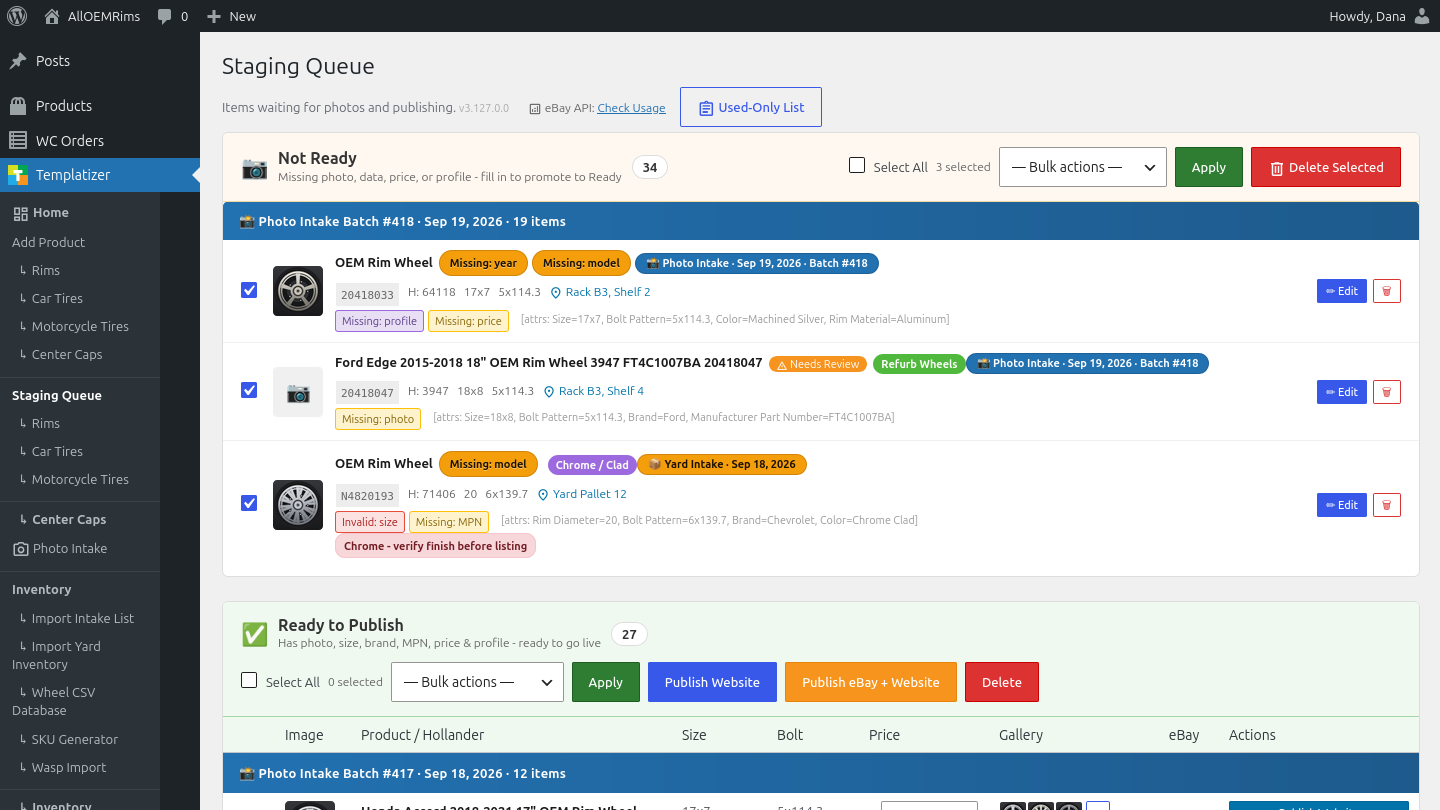
Selling one-of-a-kind items used to mean writing every listing by hand: the description, the details, the photos, the price. Typed in, one at a time, for thousands of items. This is the screen that ended that.
Someone in the warehouse takes photos of an item. The system identifies what it is, fills in every detail it already knows, writes the description, and lines the finished listing up in a queue for a quick human look. A few clicks later it's live, on eBay and the company's own website at the same time.
The person who used to spend the day typing now spends a few minutes reviewing. That's the pattern in everything I build: the system does the typing, your people do the judging.
The pricing engine
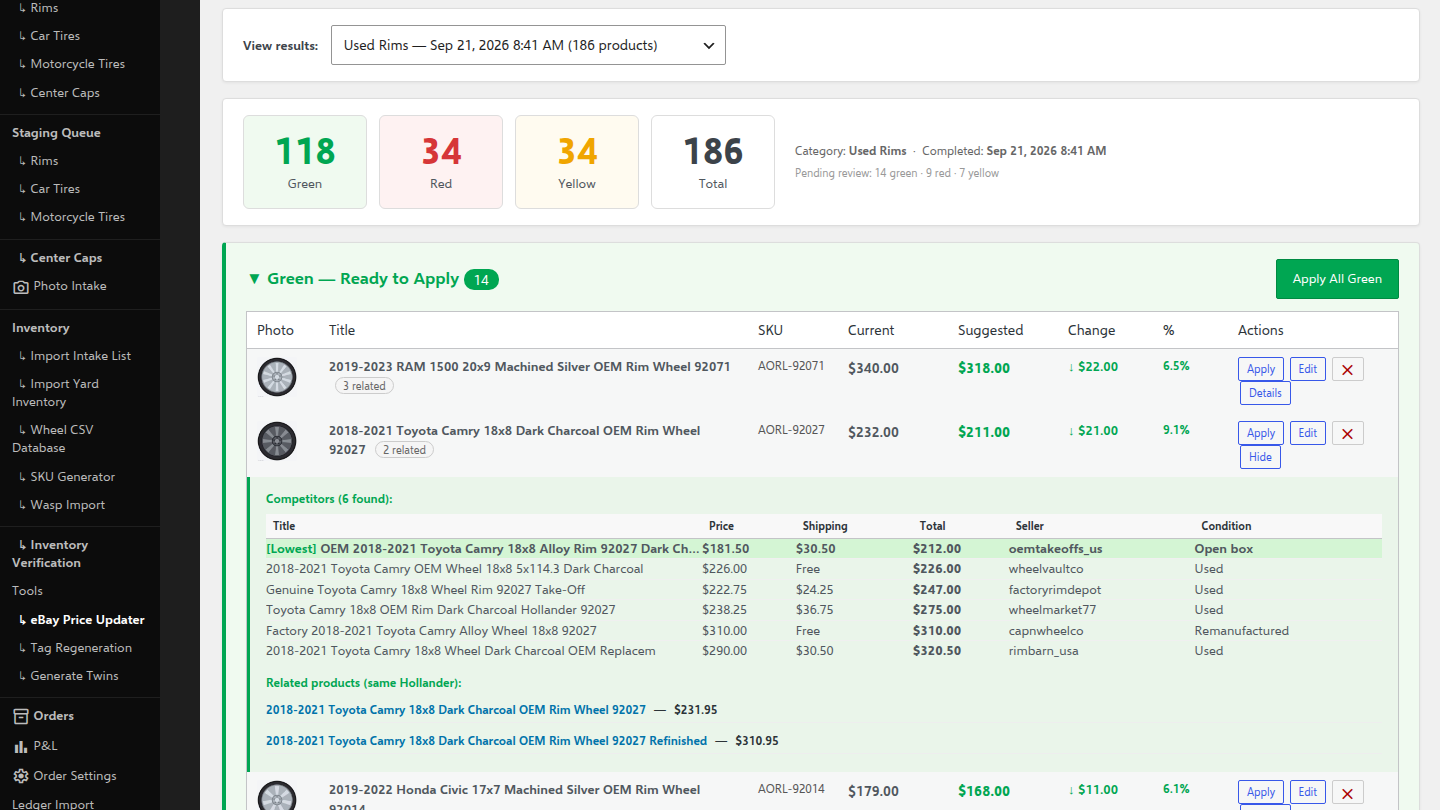
Pricing used to be a research project: open the marketplace, search for the same item, squint at the results, pick a number. Multiply that by thousands of items and it either eats your week or doesn't happen, and stale prices cost money in both directions.
Now the system does the looking. It checks what comparable items are actually selling for and suggests a price at listing time, then keeps an eye on the market afterward so prices don't quietly fall out of date. A person still decides, but the homework arrives done.
The warehouse dashboard
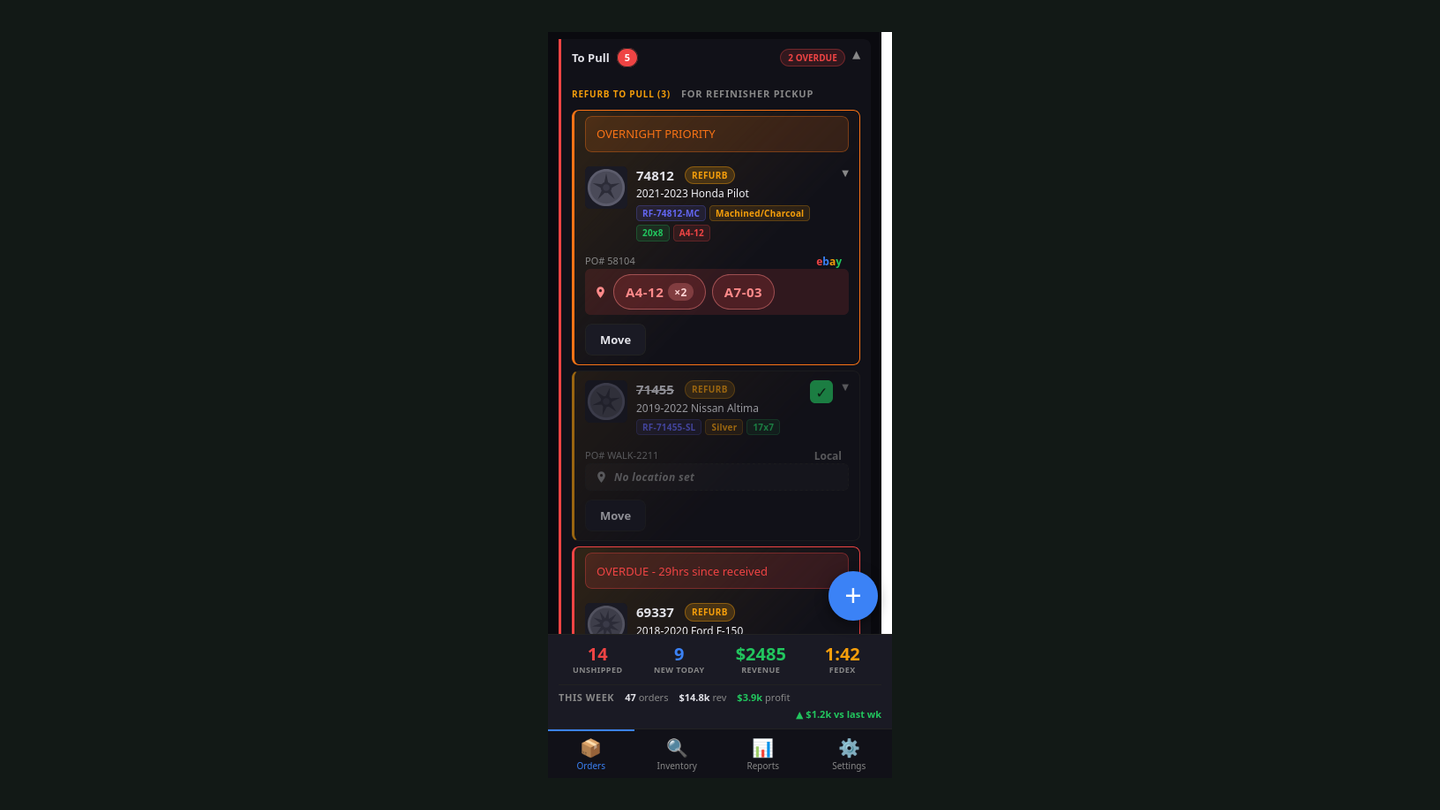
Every morning a warehouse has the same questions: what sold, what gets pulled off the shelf, what gets packed, what ships today. Answering them used to mean printouts, a desk, and a lot of walking back and forth.
The dashboard puts the whole pipeline on a tablet or phone: orders arrive as cards, move from “to pull” to “packed” to “shipped” as the work happens, and every item shows exactly which shelf it's sitting on, kept honest by barcode scans.
It also means the owner doesn't have to be in the building. The state of the floor is in your pocket, wherever you are.
The ledger
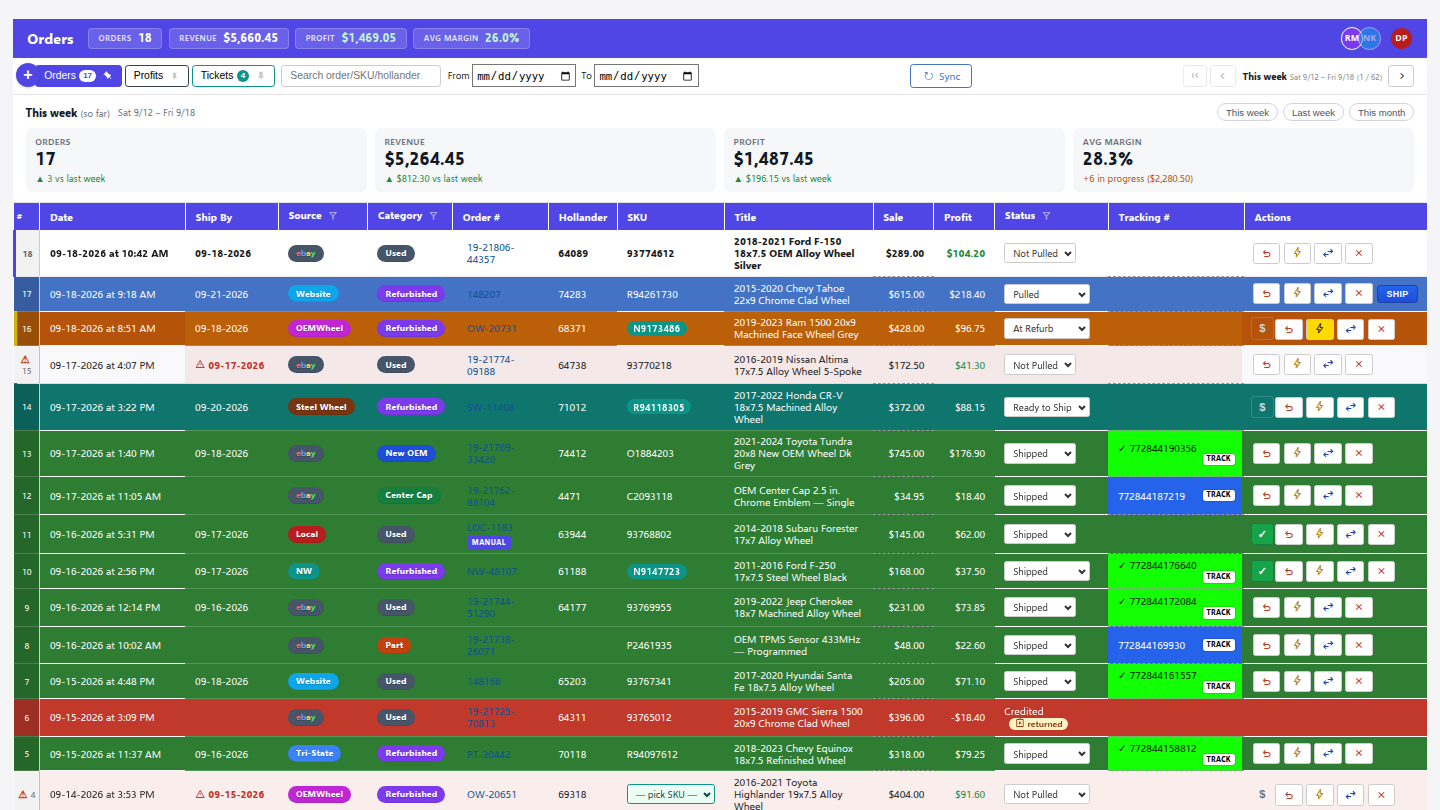
Most small businesses can't answer a simple question like “what did we sell this week, and what did we make on it?” without an evening of spreadsheet work. The history is scattered across marketplace accounts, inboxes, and someone's memory.
The ledger is one screen with every order since it went live in late 2018, more than thirteen thousand of them, searchable in seconds, with the week's scoreboard sitting on top: sales, costs, profit, live. Type a name, a part, a date; the answer is just there.
When it's tax time, when a customer calls about an order from years ago, when you're deciding what to buy more of, the record is one search away instead of one archaeology dig away.
The AI receptionist
Every missed call is a customer deciding whether to call your competitor next. But a small team can't staff a phone all day: the phone rings while hands are full of work.
So the phone answers itself. An AI receptionist picks up the business line, greets the caller, and actually helps: it looks up real orders and real stock before it speaks, takes a message when that's the right move, and puts genuinely important calls through to a person. It never has a bad day and it never lets a call ring out.
This isn't a demo: it runs on a live business line today, answering real customers.
The watchdog
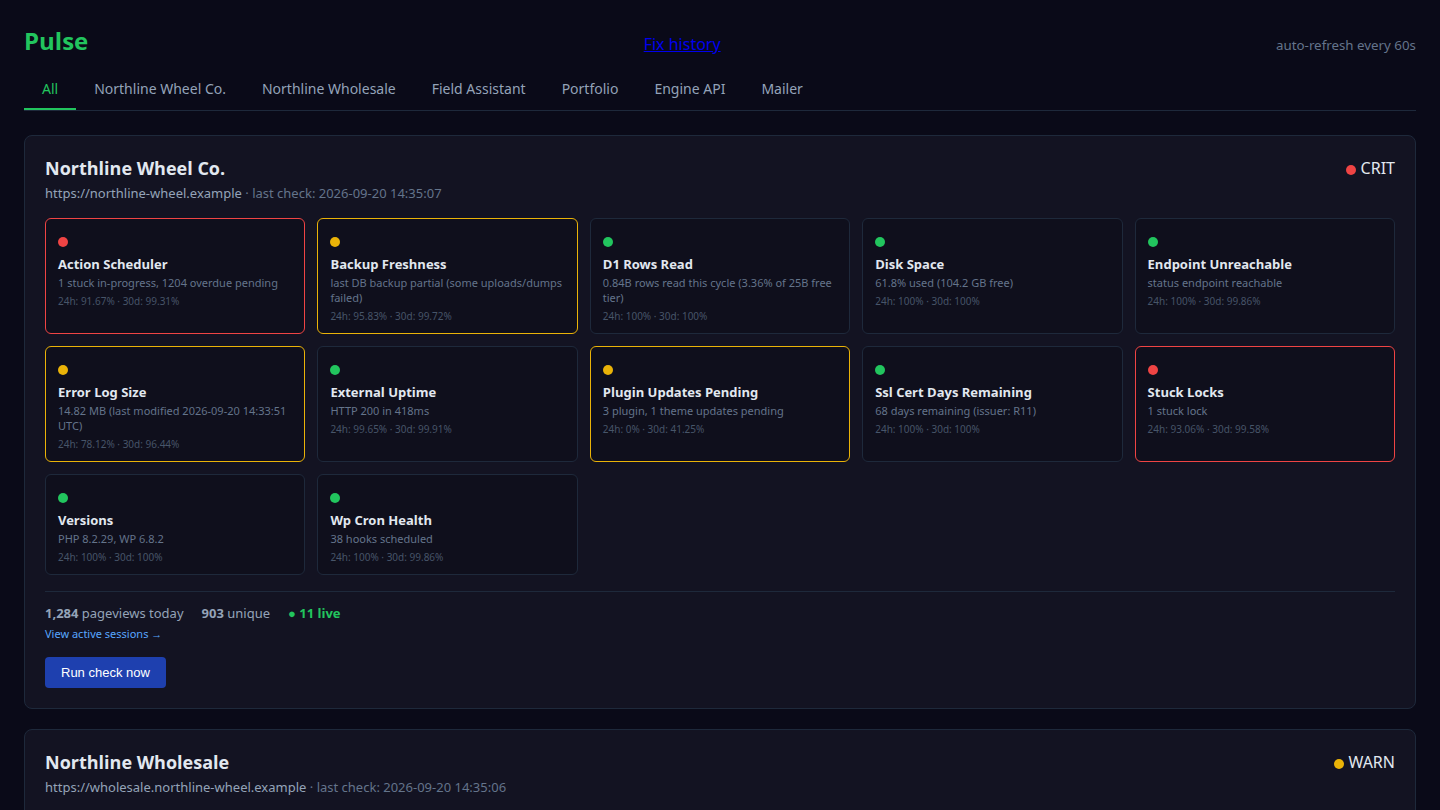
The worst way to learn your website is down is from a customer. The second worst is not learning it at all and quietly losing a day of sales.
The watchdog checks the company's sites around the clock. When something looks wrong it raises its hand immediately, and for the most common problems it goes one step further and fixes them itself, before anyone would have noticed. Backups run nightly and verify that they actually worked, which is the part most backup setups skip.
It's the reason a one-person operation can promise reliability: the system watches the system.
The support desk
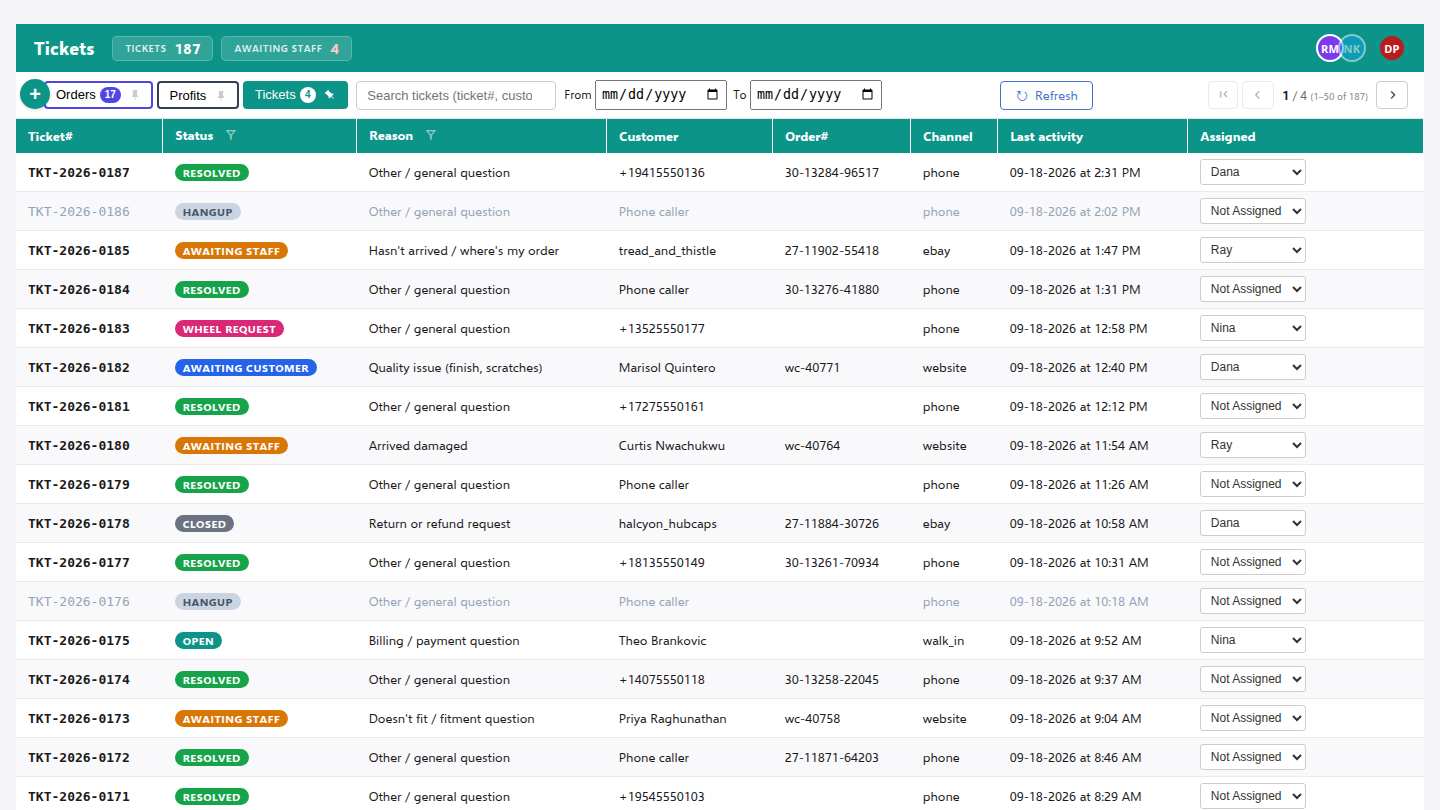
Customer questions arrive from everywhere: marketplace messages, returns, the website, the phone. Scattered across inboxes, things slip: a message goes unanswered, a return misses a deadline, and it costs money and reputation.
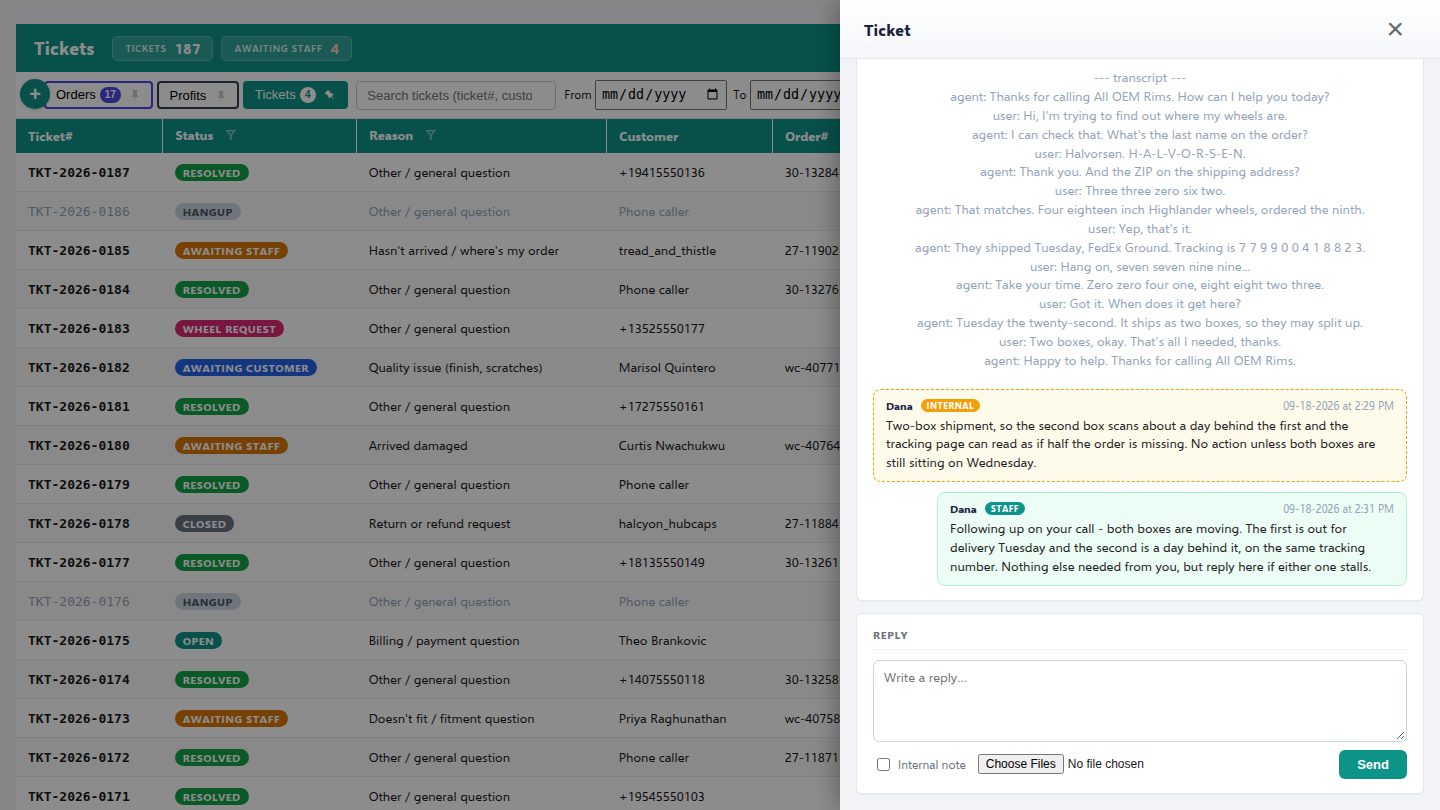
The support desk gathers all of it into one organized queue, with the customer's order attached to every conversation. Nothing needs to be hunted down; opening a ticket shows who's asking, what they bought, and the whole history in one place.
Even phone calls become tickets, including the ones the AI receptionist takes. One queue, nothing lost.
Client portals
“Just checking on my order” is the most common phone call a business gets, and every one interrupts real work. The information exists. The customer just has no way to see it.
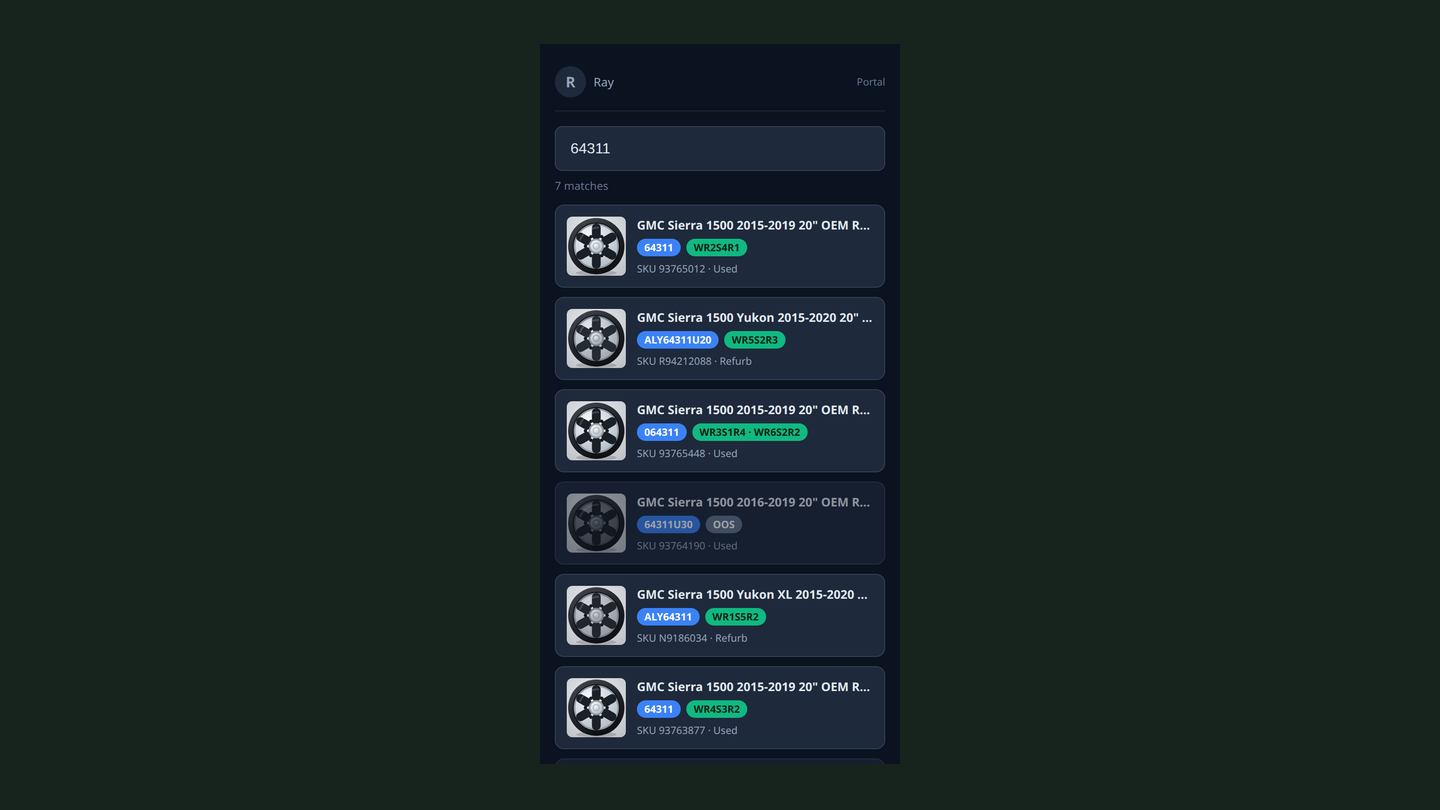
A portal gives them that window: a private page where a customer or partner sees their orders, their status, and what's next, on their own time. Access works with a simple emailed link that signs them straight in. Nothing to install, no password to forget.
The version I run today also serves the company's biggest partner: their own search screen into live inventory, which turned a daily stream of phone calls into self-service.
Which of these would matter most in your business? Start with the thing that annoys you most →
These run one company. For the things I build when nobody is specifying anything, see the projects →